


Roller Chain
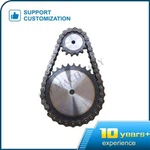
SST machinery is one of the most professional roller chain manufacturers in China. The roller chain includes four series: transmission chain; Conveyor chain; Drag chain; Special professional chain. We can provide customers with high-quality and reasonable products. We can produce roller chains according to DIN, ANSI, ISO and other standards or drawings. We also provide customers with the most thoughtful service and technical support. Please contact us immediately and get a quick quotation.
Why Choose Us
Quality Control
Inspection ensures that the quality of goods meets the standards set by the manufacturer, importer, or buyer. This helps to prevent defective or substandard products from reaching the market.
Compliance
Inspection ensures that the goods meet the legal and regulatory requirements of the importing country. Failure to comply with regulations may result in fines, penalties, or even seizure of the goods.
Contractual Obligations
Inspection helps to ensure that the goods conform to the terms of the sales contract, including specifications, quantities, and delivery dates.
Customer Satisfaction
Inspection can help to improve customer satisfaction by reducing the likelihood of defective or damaged products being delivered. This ultimately leads to increased customer loyalty and repeat business.
A roller chain is a mechanical device that transmits power from a motor or other source to a driven shaft. It's made up of a series of rollers that are connected by side links and are driven by a toothed wheel called a sprocket.


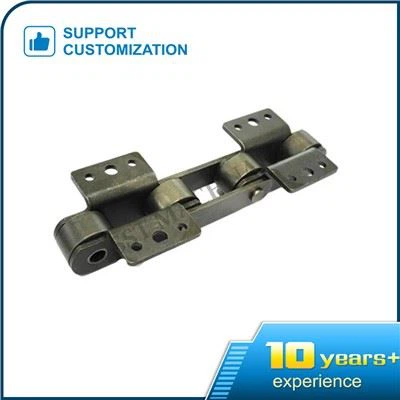


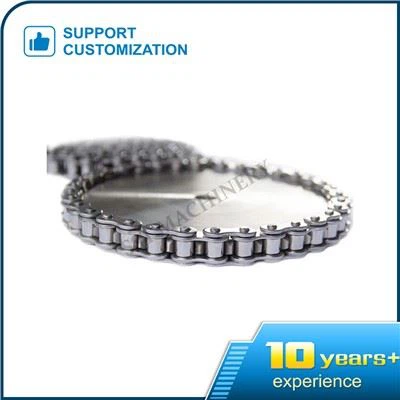
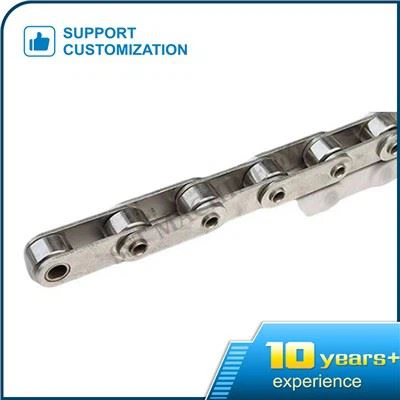


The Fundamental Components Of Roller Chain
Link Plates
Link plates serve as the foundation of a roller chain. These flat metal plates connect various chain links together, forming a continuous loop structure. The robustness and integrity of link plates are crucial to the overall strength and performance of the chain.
Rollers
Integral to the functionality of a roller chain, rollers are cylindrical components that reside between the link plates. These rollers ensure smooth rotation and reduce friction during operation, enhancing the efficiency and lifespan of the chain.
Bushings
Bushings are cylindrical metal sleeves that accommodate the pins within the roller chain. By providing a low-friction surface for the pin rotation, bushings contribute to the overall strength and longevity of the chain.
Pins
Pins act as the primary connecting elements within a roller chain. They fit through the bushings and link plates, securing the chain's structure and allowing it to transmit power effectively. The pins play a vital role in maintaining the integrity and functionality of the chain.
Drive chain rollers are typically smaller in diameter than the height of the chain's link plates. Thus, when the chain engages the sprockets, the link plates function as guides, and they may also serve as guides while the chain is riding on principles, as in a bucket elevator.
Conveyor chain rollers are often much more significant in diameter than the widths of their neighboring sidebars. It is done for two reasons:
The large rollers, known as carrier rollers, carry the sidebars well above the conveyor tracks, preventing friction; and Larger rollers have a distinct mechanical advantage over smaller rollers in terms of rotational friction, assisting in reducing chain pull.
Most chains employ carrier rollers to engage the sprockets. On the other hand, carrier rollers with antifriction bearings are occasionally employed as outboard rollers on roller-less chains. Roller-less chain resembles a roller-equipped chain and is used in situations where rollers are not required.
Various varieties of roller chains are available, and all are built for a specific application. All roller chains are made with rollers equally placed along the chain. The fact that the rollers spin when they come into contact with the teeth of the sprocket is a significant benefit of the roller chain.

Advantages Of Roller Chains
Roller Chain have the advantages of reducing friction, noise, and smoothing without grease. At present, the strength of engineering plastics is still relatively low, so it can only be used to make chains for small conveyor machines and rollers on lighter conveyor chains. Using oil-containing powder metallurgy materials to make chain sleeves and rollers can also have the effect of reducing friction and not being smooth, and the weight of powder metallurgy materials is lighter than steel. Of course, a chain with good working performance under high temperature and corrosive conditions is also guaranteed by using special performance materials.
Accurate roller chains, bushing chains, roller chains, bushing chains for transmission, long pitch roller chains for transmission, heavy-duty curved plate roller chains for transmission, transmission chains for oil rigs; toothed transmission chains; casting, Punching hook chain; conveying roller chain, conveying long pitch roller chain, conveying flat top chain, solid pin, hollow pin conveying chain, conveying chain with attachments; die forging, punching detachable chain (suspended Transportation chain); plate chain for lifting, round link chain; corrosion-resistant stainless steel chain, plastic chain, powder metallurgy chain; continuously variable speed chain; anti-skid chain.
The chain is evolved from the early malleable cast iron chain, S type is-shaped chain plate, C type is straight chain plate. It is suitable for the places where the chain plate slides on the track during the transportation of crops and articles, and the embossed boss in the middle of the C-shaped chain plate (the boss should be higher than the pin rivet head) is suitable for in-plane operation of the chain Use the boss as the sliding pair to touch the track to prevent the end of the pin from wearing and avoiding the failure of the chain.
Measuring Roller Chain
Chain Pitch
To find the chain pitch, you’re looking for the distance between the center of two pins. For larger chains you might be able to find this using a ruler or tape measurer, but a caliper is always your best bet.
Roller Width
The roller is the cylindrical component in between the two plates of the link, through which is the pin. Use the caliper to measure the distance from both ends of the roller, which should extend to the inside of both plates.
Roller Diameter
The roller diameter is essentially the thickness of the cylinder. Slide the caliper against the rounded sides of the roller to determine the diameter.
Plate Height
Each roller chain link has plates on either side. These plates can either be straight (sometimes known as a straight sidebar) or curved (often referred to as a figure-8 sidebar). Lay the chain flat on a table so that the rollers are visible from the top. Looking at the chain from the side, simply measure from the top of the plate to the bottom to determine the height. For a figure-8 plate, measure at the or tallest part surrounding the pin.
Plate Thickness
Keeping the chain flat with the rollers facing up, to find the plate thickness you will be measuring the width of the plate. This is where a caliper is very important as thicknesses can range from 0.03” to 0.218” with plenty of outliers.
How To Use And Maintain Roller Chain
For ordinary transmissions, it should not be sloppy in use during normal cleaning, otherwise it will affect its use effect. Generally, the stainless steel chain adopts a hyperbolic arc design to reduce friction, and is suitable for occasions with high power and slow running speed.
But after each use, you must not forget to clean the stainless steel chain, especially in rainy and humid environments. Please wipe the chain and its accessories with a dry cloth; if necessary, use an old toothbrush to clean the gaps between the chain pieces to remove the sand and dirt accumulated between the chains.
When cleaning stainless steel chains, warm soapy water can be used, but strong acid or alkaline cleaners should never be used as these chemicals can damage or even break the chain. In addition, do not use a solvent-added solution to clean the stainless steel chain, which will damage the chain to some extent. In addition, the use of organic solvents such as stain-removing oil should be avoided when cleaning the stainless steel chain, because this will not only damage the environment, but also clean the lubricating oil in the bearing part. When it comes to lubricants, by the way, I would like to emphasize the requirements of stainless steel chains for lubricants.
Lubrication is very important for stainless steel chains, so no matter what kind of structural chain is used, it must be lubricated reasonably. There are two ways to do this job: one is direct lubrication, and the other is lubrication after cleaning. The premise of direct lubrication is that the stainless steel chain itself is relatively clean, and it can be directly lubricated with spray irrigation lubricating oil products. After the stainless steel chain is cleaned and lubricated, it is more suitable for the situation where the chain is dirty.
Roller chains are used in relatively high temperature environments:
- The roller chain enables the actuator to obtain a certain speed and direction of the transmission chain. The inner connection transmission chain is a transmission chain that connects the two unit movements inside the compound movement, or connects the actuators that realize the movement of the two units inside the compound movement. The essential difference between the two is that the movement is composed of a single or multiple movements and an external linkage transmission chain, which is the entire compound movement and the external movement source.
- Only determining the speed and direction of the forming motion has no direct influence on the shape of the machined surface, and because the internal linkage transmission chain is linked to the compound motion, the two unit movements that must ensure strict kinematic linkage inside determine the track of the compound motion. Whether its transmission ratio is accurate and whether the relative motion of the two units determined by it is correct will directly affect the shape accuracy of the machined surface and even fail to form the required surface shape.
- The suspension chain has double horizontal wheels, which can effectively reduce the load capacity of the horizontal wheel bearings. Its main parts are based on 40 manganese steel and have undergone heat treatment, which can effectively increase the tensile strength of the chain and prolong the service life of the chain. The structure of this chain is reasonable, the cross steering shaft is forged and formed in one piece, and the special rivet joint design. In order to enhance the load capacity of the chain, the horizontal and vertical wheels are designed with higher specifications, and at the same time have the characteristics of flexible steering, strong tensile resistance, and heavy load. Especially suitable for use in environments with relatively high temperatures.
- The daily maintenance of the chain is divided into primary maintenance and secondary maintenance. During the normal use of the production line, due to normal or accidental wear and tear, as well as various abnormal phenomena during the operation of the production line, it must be stopped immediately and reported for repair in time to avoid major accidents. Non-professional maintenance personnel or without the permission of professional maintenance personnel are not allowed to repair by themselves.
Our Factory
SST machinery was established in 2010, engaged in two lines of transmission products, machine transmission and hydraulic transmission, like gear, sprocket, pulley, belt and hydraulic fitting, ferrule, adapter, brass fitting, connector ect.
We are not only proceed production strictly with DIN, ANSI, ISO standard and control well for tolerance, but also make products exactly as client's drawing.
FAQ